Social listening is the process of monitoring digital conversations to understand what customers are saying about your brand, your competitors, and your industry online. Unlike social monitoring — which tracks direct mentions and notifications — social listening goes deeper, analyzing the context, sentiment, and trends behind those conversations to extract actionable insights.
In 2026, social listening has become one of the most powerful tools available to marketers, PR teams, and product managers. It turns the noise of social media into structured intelligence that drives smarter decisions.
Many people use these terms interchangeably, but they mean different things. Social monitoring is reactive — it tracks what's being said and alerts you to mentions. Social listening is proactive — it analyzes patterns, sentiment, and trends over time to inform strategy.
Think of monitoring as reading your notifications. Think of listening as understanding why people feel the way they do about your brand — and using that understanding to get ahead of problems before they happen.
The insights you can extract from social listening are broader than most people realize. Beyond tracking brand mentions, social listening can help you understand how customers feel about a new product launch, identify emerging trends in your industry before they go mainstream, monitor how a competitor's campaign is being received, uncover unmet customer needs that your product could address, and detect potential PR crises early enough to respond before they escalate.
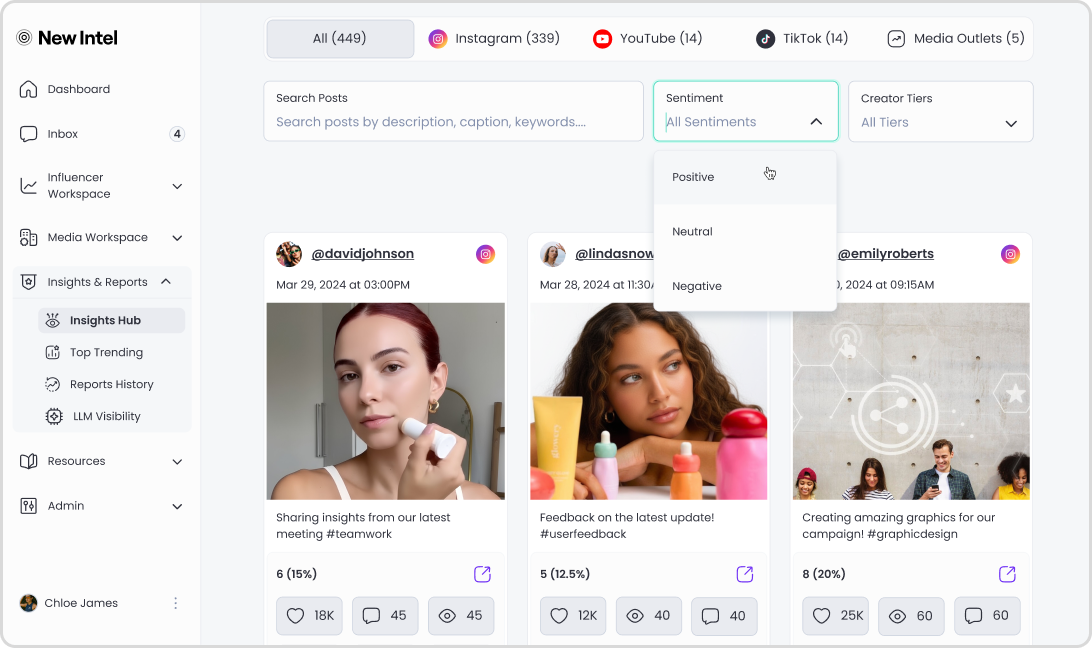
Modern social listening platforms like New Intel use AI and machine learning to crawl millions of posts, articles, reviews, and forum threads in real time. Natural language processing (NLP) is used to identify the topics, entities, and sentiment in each piece of content. The results are surfaced in dashboards that allow marketers to filter by platform, time period, geography, language, and more.
The best platforms go beyond simple keyword matching to understand context — distinguishing between someone saying they love your product and someone sarcastically saying they love waiting three weeks for delivery.
The first step is defining what you want to listen for. Start with your brand name, product names, key executives, and branded hashtags. Then expand to include competitor names, industry keywords, and relevant topics. Set up alerts for spikes in mention volume or sudden shifts in sentiment — these are often the early warning signs of something important.
Review your data regularly and look for patterns. Are there recurring complaints that point to a product issue? Are customers asking questions that your content strategy isn't answering? Are there positive themes you could amplify in your marketing?
Social listening is one of the highest-ROI investments a modern marketing team can make. The brands that understand what their customers are really saying — not just what they're posting — are the ones that build lasting loyalty, respond to crises faster, and stay ahead of the competition.
Built on IMAI's infrastructure - A Stagwell Company
(NASDAQ: STGW).