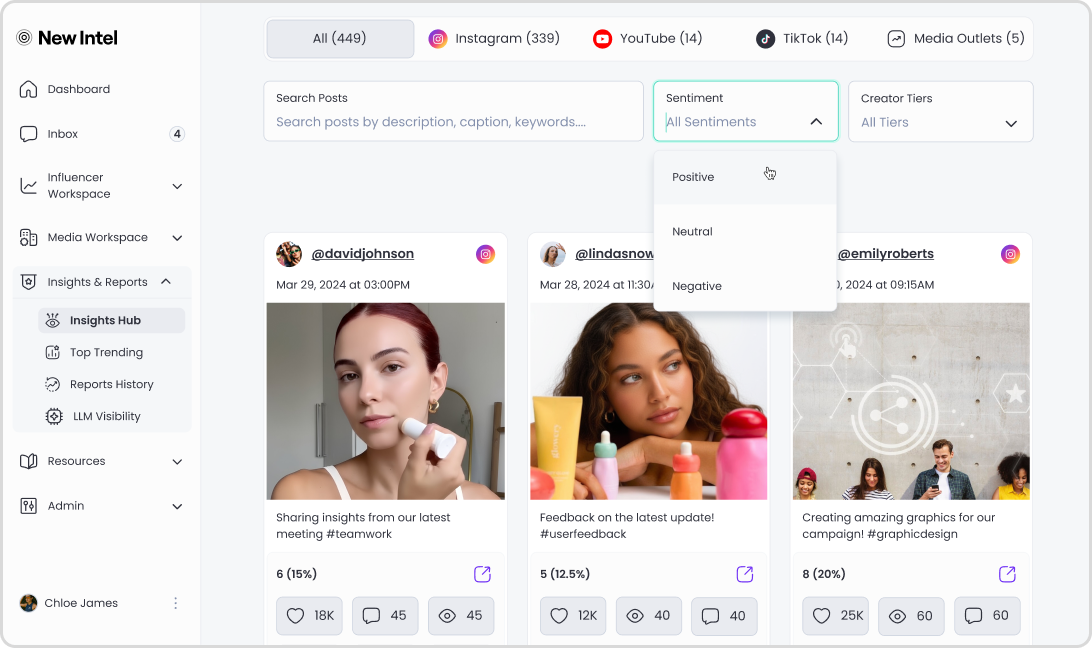
Artificial intelligence has been a part of social media platforms for years — powering recommendation algorithms, content moderation systems, and ad targeting engines. But in 2026, AI has fundamentally transformed the social intelligence layer as well: the tools and processes that brands use to understand what's happening in social media and extract insights that drive business decisions.
The change has been dramatic. What once required a team of analysts spending days manually reviewing social data can now be accomplished automatically in minutes. And the insights being surfaced are deeper, more nuanced, and more actionable than anything that was possible just a few years ago.
Early sentiment analysis tools were based on simple keyword matching — if a post contained words like 'love' or 'great,' it was classified as positive; if it contained words like 'hate' or 'terrible,' it was classified as negative. The results were crude and often wildly inaccurate.
Modern AI-powered sentiment analysis uses large language models trained on billions of examples of human language to understand context, nuance, and even sarcasm. The accuracy gap between 2020-era tools and 2026-era tools is enormous — and it has a direct impact on the quality of insights that brands can extract from their social data.
One of the most transformative applications of AI in social intelligence is predictive analytics — the ability to forecast future trends based on patterns in historical data. Instead of simply telling you what happened, AI-powered social intelligence platforms can now tell you what's likely to happen next.
This predictive capability allows brands to get ahead of trends before they peak, anticipate competitive moves, and identify emerging audience interests before they become mainstream. The brands that master predictive social intelligence in 2026 will have a significant strategic advantage over those that are still operating reactively.
The latest generation of social intelligence platforms goes beyond data presentation to deliver AI-generated insights and recommendations. Instead of showing you a dashboard of metrics and leaving you to draw your own conclusions, these platforms analyze your data, identify the most important patterns and anomalies, and surface specific recommendations for action.
New Intel's AI insights engine, for example, can automatically identify when a competitor is gaining share of voice in a specific topic area, recommend content topics based on emerging trends in your audience, and flag potential crisis signals before they escalate — all without requiring a data analyst to manually review the data.
Despite the power of AI, the human element remains essential in social intelligence. AI is excellent at processing large volumes of data, identifying patterns, and surfacing signals. But understanding the strategic implications of those signals — and deciding what to do about them — still requires human judgment, creativity, and contextual understanding that no AI system can fully replicate.
The most effective social intelligence programs in 2026 combine the scalability and speed of AI with the strategic thinking of experienced marketers. AI handles the data processing; humans handle the decision-making. Together, they produce better outcomes than either could achieve alone.
Built on IMAI's infrastructure - A Stagwell Company
(NASDAQ: STGW).